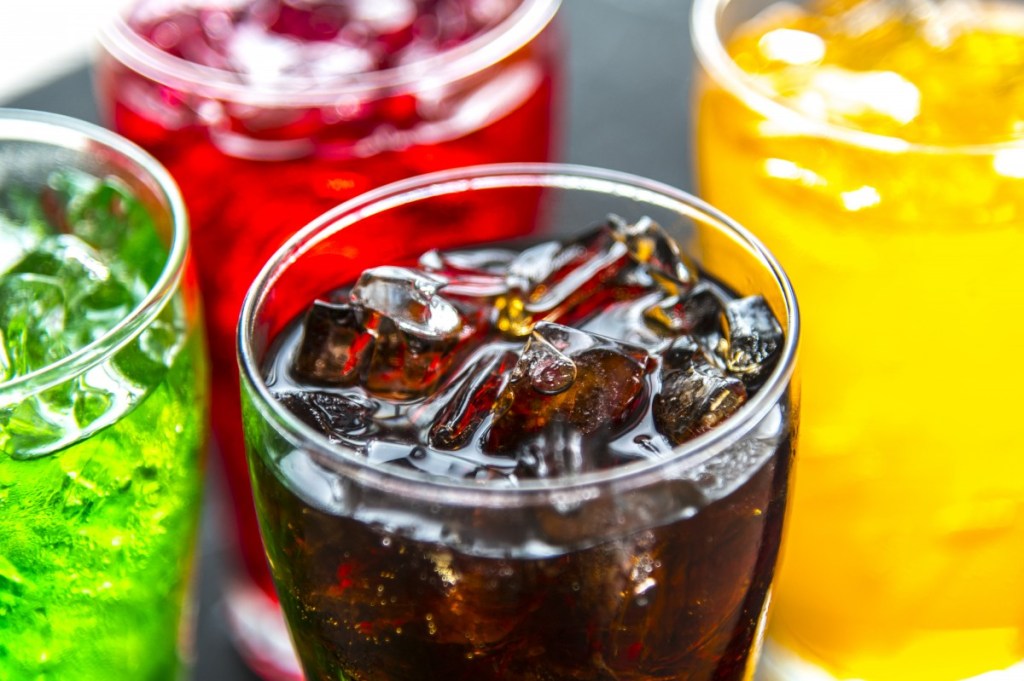
Some of the most popular beverages on the market today are fizzy soft drinks like colas (Coca-Cola, Pepsi etc) and other sodas of various flavors (Sprite, Fanta, Mountain Dew, etc.). These drinks are enjoyed by people around the world, and they seem like pretty straightforward concoctions. Water, sugar, carbon dioxide and the desired flavor appear to be the basic ingredients in these drinks. What’s fascinating, however, is that some of these drinks also happen to contain caffeine – a stimulant that most people associate with drinking their first cup of morning coffee.
First off, let’s note that caffeine is a CNS (central nervous system) stimulant. We know that people drink coffee because of the “buzz” it gives them, allowing them to concentrate better on the task at hand. Therefore, it would be natural for people consuming caffeinated sodas to get a similar buzz, which would not only make them more attentive, but also improve their mood. Perhaps the combination of high sugar levels in fizzy soda, along with the small amount of caffeine they contain, could give drinkers the “pick me up” they desire.
Now, here are the caffeine contents of Coke, Pepsi and Mountain Dew: 34 mg, 38 mg and 54 mg, respectively. These are figures for a 350 ml (12 oz) can. There is scientific evidence showing that withdrawal symptoms can arise after staying away from a daily dose of only 100 mg of caffeine, which means that drinking 3 cans of Coke or Pepsi and 2 cans of Mountain Dew a day is enough to make you addicted.
Again, these are just some of the possible reasons why caffeine may be included in these fizzy drinks, as its flavor-enhancing properties don’t seem to be very effective. Well, at least coffee-lovers now know a few other ways to get their caffeine fix if a cup o’ coffee isn’t available!
 My Soda Blog